
Fastest flash memory
A research team at Fudan University has developed the fastest ever flash memory device called “Poxiao” or Dawn, the Chinese Scientists claim, the new memory chip is 10,000× faster than today’s tech, with near-zero power and 100-year retention.
The fastest semiconductor storage device is a non‑volatile flash memory that reportedly programs a single bit in 400 picoseconds (0.0000000004 s) that is roughly 25 billion operations per second. One picosecond is one trillionth of a second.
To put it in the simpler terms, the new memory tech could make your RAM and SSD look like floppy disks of the past.
The static and dynamic RAM (SRAM, DRAM) used nowadays can write data in 1–10 nanoseconds. They lose all stored data when power is lost, hence are volatile.
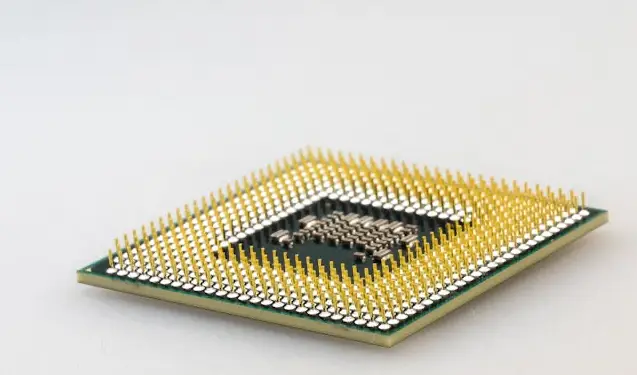
Compact flash Memory chip
Flash memory on the other hand is non-volatile as it retains data without power, but flash memory also has a drawback.
It typically requires microseconds to milliseconds per write operation, making it far too slow for modern AI accelerators, which process terabytes of parameters in real time.
The achievement of Fudan University is significant, it surpasses the speed of traditional flash memory and even some volatile memories. The device is smaller than a grain of rice.
AI computing power
The research may help overcome the limits of information storage speed, it may also solve a key technical bottleneck restricting the potential of AI computing power.
“It’s been 60 years since Bell Labs introduced the floating-gate transistor. If we had just stuck with traditional theories or relied on material changes, we wouldn’t have made any major breakthroughs. That is why we have focused on developing a completely new approach to flash memory,” Liu said.
The researchers introduced a new approach to accelerate flash memory, allowing electrons to directly transition from a low-speed to a high-speed state without the need for a “warm-up” phase.
This new theory, called “2D-enhanced hot-carrier injection” – led to the development of a prototype device.
According to a report published by scmp.com, the “Poxiao” flash memory device is now moving towards production. Combined with CMOS technology, the chip has already been successfully fabricated at the kilobyte level.
Within five years, the team hopes to scale it to tens of megabytes and have it licensed and ready to market.
The team began researching flash memory devices in 2015. In 2021, they proposed an initial theoretical model, and last year, they developed a superfast flash memory device with an 8-nanometre channel length, surpassing the physical size limit of silicon-based flash memory, which was around 15 nanometres.
According to an article on Fudan University’s website, it is the world’s fastest semiconductor storage technology to date, achieving equal storage and computation speeds. “Once scaled up for mass integration, it is expected to completely disrupt the current storage architecture,” the article said.
More in Tech
What are tariffs? | China vs America trade war?
2025-04-16
politicsIndia Population 2026 | India vs China Population
India Population 2026: World's Most Populous Country | Trends & China Comparison
2024-05-03
travelWhat is THE LINE. NEOM Project THE LINE City.
THE LINE, NEOM Project THE LINE City | News Video | Dedaandsons
2022-11-24
videosSamsung Galaxy Fold | Samsung Galaxy Z Series | Z Flip 4 5G.
Samsung Galaxy Z series phones | Samsung Galaxy Fold | Samsung Galaxy Z Flip 4 5G.
2023-02-12
techXiaomi automobile SU7 Sedan outperform Tesla, BYD, in China
Xiaomi SU7 Sedan | SU7 vs Tesla vs BYD, in China | xiaomi cars in india | SU7 Price.
2025-06-30
automobileGolden Dome | US space-based defence system?
Golden Dome US space based Air Defence System | China concerned over golden dome? | US counter to Russian IRBM?
2025-05-24
worldCryptocurrency is not considered Halal, here's why?
Cryptocurrency is not halal in the Islam. Crypto is not Halal;
2024-03-30
techइलेक्ट्रिक और सेल्फ-ड्राइविंग वाहन की जानकारी ।
इलेक्ट्रिक गाड़ियों और सेल्फ-ड्राइविंग गाड़ियों का भविष्य | सेल्फ-ड्राइविंग गाड़ियां?
2025-07-24
techFuture of AI | Impacts on, transport, education, jobs etc?
Artificial intelligence and its future, use cases, generative ai use cases and concerns related.
2024-04-17
techSamsung Galaxy Fold | Samsung Galaxy Z Series | Z Flip 4 5G.
Samsung Galaxy Z series phones | Samsung Galaxy Fold | Samsung Galaxy Z Flip 4 5G.
2023-02-12
techElon Musk's Everything App | X vs Chinese WeChat
Elon Musk's X vs Chinese WeChat App | Elon Musk's everything app, X?
2024-05-30
techApple introduces Calculator app to iPad, at WWDC24.
2024-06-11
techList of iPhones compatible with iOS 18 | iOS 18 update?
2024-06-12
techHonor Magic V Flip with biggest ever external display in a f
2024-06-15
techSamsung Galaxy S23 FE in 2024. Flagship features, mid-range?
Samsung Galaxy S23 FE Specs, pros/cons | Samsung Galaxy S23 FE
2024-06-25
techComparison, specs, Vivo Y28s, Y75, Y22s, other Y-series phon
VIVO Y28s and Y series | Comparison, specs, Vivo Y28s, Y75, Y22s, Y-series phones.
2024-07-15
techVivo V9 Youth Price in India, Specs, Battery & Colours
Vivo V9 Youth Price in India ₹17,990, Full Specs, Battery & Colours
2021-07-03
techOpenAI to launch AI search engine, SearchGPT.
2024-07-26
tech5G और 6G की स्पीड (रफ़्तार) तुलना, अंतर, और कैसे बदलेंगे ये ह
2024-09-03
techEmbrace a Zero Waste Living. Zero-Waste lifestyle
Understand the Zero-Waste Mindset | Eco-Friendly Life | How to Embrace a Zero Waste Living | Zero-Waste lifestyle.
2024-12-14
techExplore Dedaandsons
Discover more free tools, services and features.
Editorial Guidelines
Learn how Dedaandsons researches, updates and publishes news, articles and educational content.
Connect with Dedaandsons
Support Dedaandsons
Help us keep our articles, tools and services free for everyone.
Work with Dedaandsons
Advertising, partnerships, guest articles and business enquiries.
Contact Us →